


Plant-Based Colour Explained
Natural Dye Colour Glossary
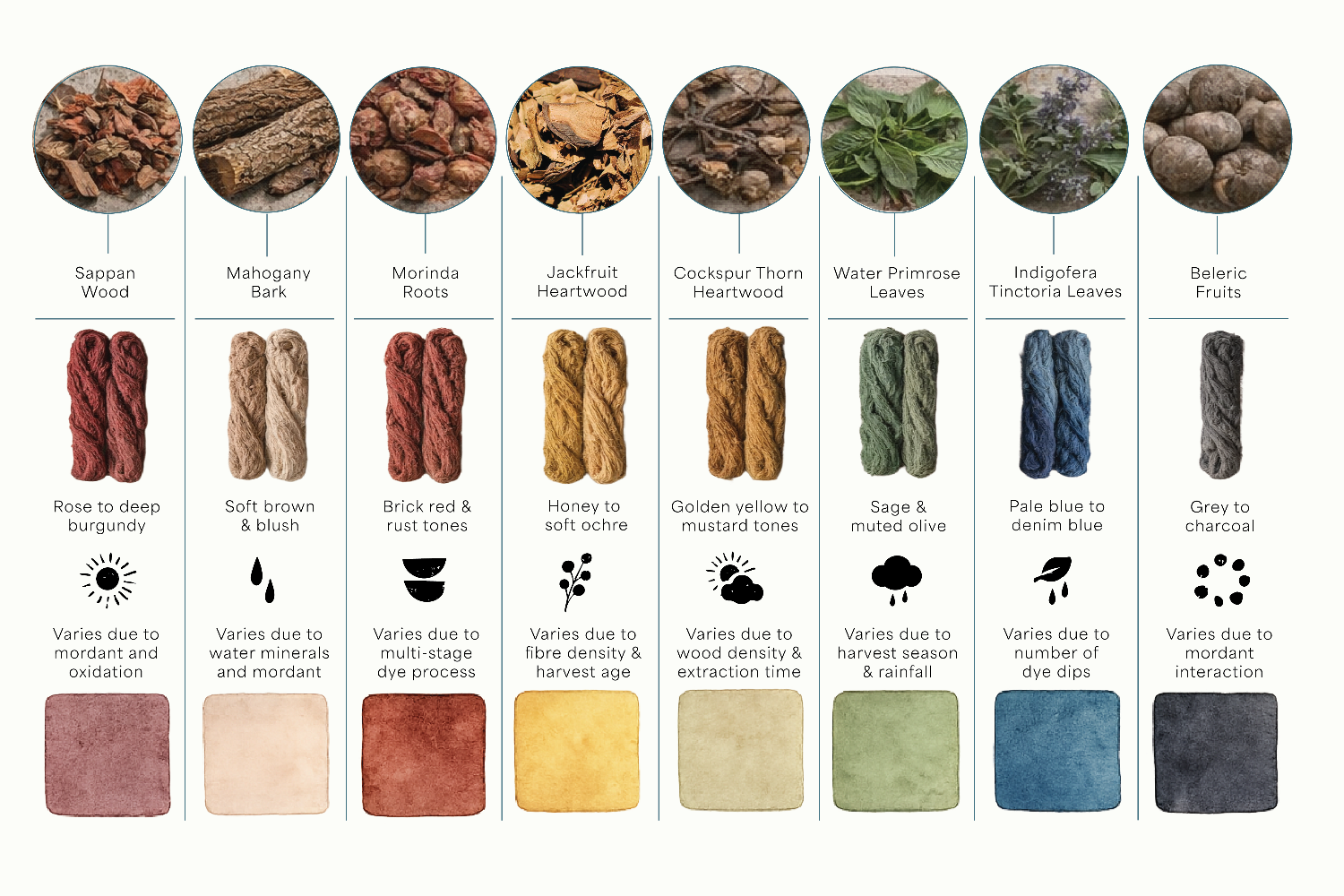
A visual guide to plant-based colours and how to understand natural variation in dyed textiles. Unlike synthetic dyes, plant dyes create ranges of colour shaped by material, sunlight, water, and hand-dyeing. This glossary helps you recognise tone, depth, and variation across our natural dye palette.
All colours used by RŪPAHAUS are derived from plant materials and do not use animals or animal-derived substances in the dyeing process, unless explicitly stated otherwise.
Where a traditional dye involves animal-derived inputs, this is clearly identified at the individual colour level.
How to read plant-dyed colour
PLANT DYES PRODUCE COLOUR FAMILIES, NOT EXACT MATCHES
TONE MAY SHIFT SLIGHTLY BETWEEN BATCHES
LIGHT, FIBRE, AND HAND PROCESSES INFLUENCE OUTCOME
VARIATION REFLECTS CRAFT, NOT INCONSISTENCY
OUR NATURAL DYE PALETTE
Each colour below reflects a specific plant source and a long-standing dyeing tradition, interpreted through slow, artisan-led processes.
INDIGO
Source: Indigofera tinctoria
Derived from: Leaves, 100% plant-based
Sustainability & craft:
Indigo colour is extracted from fermented plant leaves and applied using traditional hand-dyeing methods. The process relies on botanical materials and manual techniques, supporting low-impact production and long-standing artisan knowledge.
MORINDA ROOTS
Source: Morinda citrifolia
Derived from: Roots, 100% plant-based
Sustainability & craft:
Morinda root has been used for generations in natural dyeing traditions. The roots are harvested sustainably without disrupting the plant's growth, processed manually and dyed in small batches, supporting artisan-led production without the use of synthetic colourants.
SAPPANWOOD
Source: Caesalpinia sappan
Derived from: Heartwood, 100% plant-based
Sustainability & craft:
Sappan wood is used as a natural dye source through traditional extraction and hand-dyeing processes. Its use reflects long-standing craft practices and a preference for plant-based colour over synthetic alternatives.
JACKFRUIT HEARTWOOD
Source: Artocarpus heterophyllus
Derived from: Heartwood, 100% plant-based
Sustainability & craft:
Jackfruit heartwood is repurposed as a natural dye source, making use of existing plant material. Dyeing is carried out by hand in small batches, supporting slow production rhythms.
MAHOGANY BARK
Source: Swietenia macrophylla King atau Swietenia mahagoni
Derived from: Bark, 100% plant-based
Sustainability & craft:
Mahogany bark provides grounded, earthy tones through manual dyeing methods. Using bark as a dye source supports low-impact colour processes and avoids chemical dyes.
COCKSPUR THORN
Source: Flacourtia jangomas
Derived from: Heartwood, 100% plant-based
Sustainability & craft:
Cockspur thorn heartwood is used in traditional dyeing practices to produce warm, natural yellow to ochre tones. The dyeing process relies on plant material and manual methods rather than synthetic inputs.
WATER PRIMROSE
Source: Ludwigia octovalvis
Derived from: Leaves, 100% plant-based
Sustainability & craft:
Water primrose leaves are used to create natural dye baths applied by hand. This approach reflects local plant knowledge and supports low-impact, artisan-led dyeing practices.
BELERIC FRUIT
Source: Terminalia bellirica
Derived from: Fruit, 100% plant-based
Sustainability & craft:
Beleric fruit has long been used in natural dyeing traditions. The fruit is processed manually and applied through small-batch dyeing methods, avoiding synthetic colourants.
MUD
Source: Naturally occurring mineral-rich mud, locally sourced
Derived from: Volcanic, alluvial, or sedimentary mineral deposits
Sustainability & craft:
Mud dyeing uses naturally occurring mineral pigments sourced from specific geological environments in Indonesia, including volcanic clay, river and rice-field sediments, and ancient cave deposits. Rich in minerals such as kaolinite, hematite, quartz, and feldspar, these muds are applied using traditional artisan techniques to create earthy tones.
While not plant-based, the process does not involve animals or animal-derived substances and reflects place-based, low-impact craft traditions.
Explore the Foundations
Use these pages as a reference for how we design, source, and make.