




Our Material Foundation
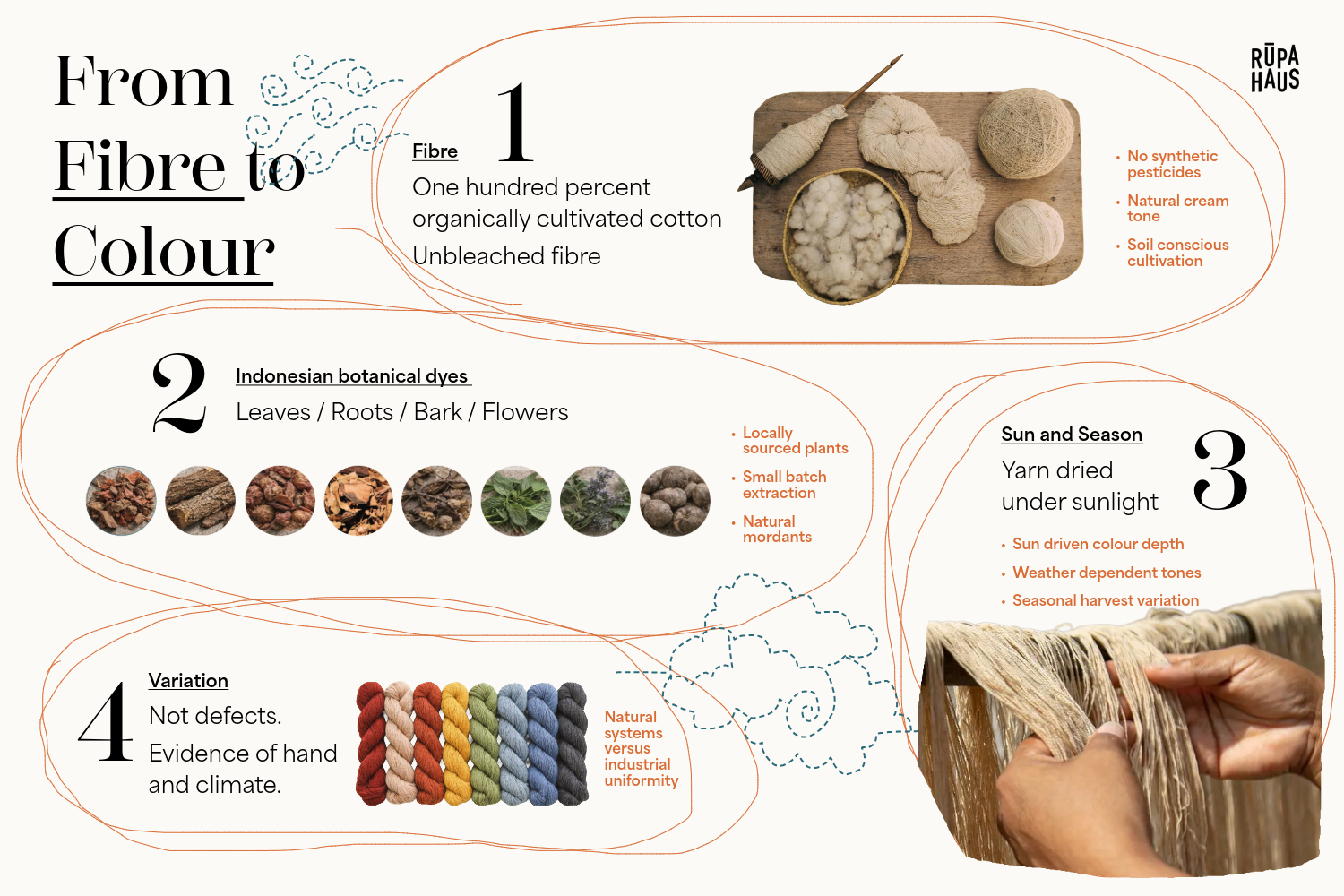
At RŪPAHAUS, our garments are shaped from 100% organically cultivated, unbleached cotton grown locally in Indonesia, coloured using plant-based dyes extracted locally to the artisans communities we partner with.
Select garments, including our T-shirts — are made using 100% GOTS-certified cotton, where fibre type and function require it. This distinction reflects garment purpose, not hierarchy.
Material choice is not aesthetic first.
It is structural.
What is 100% Organically Cultivated, Unbleached Cotton?
External references: Britannica - Organic Farming
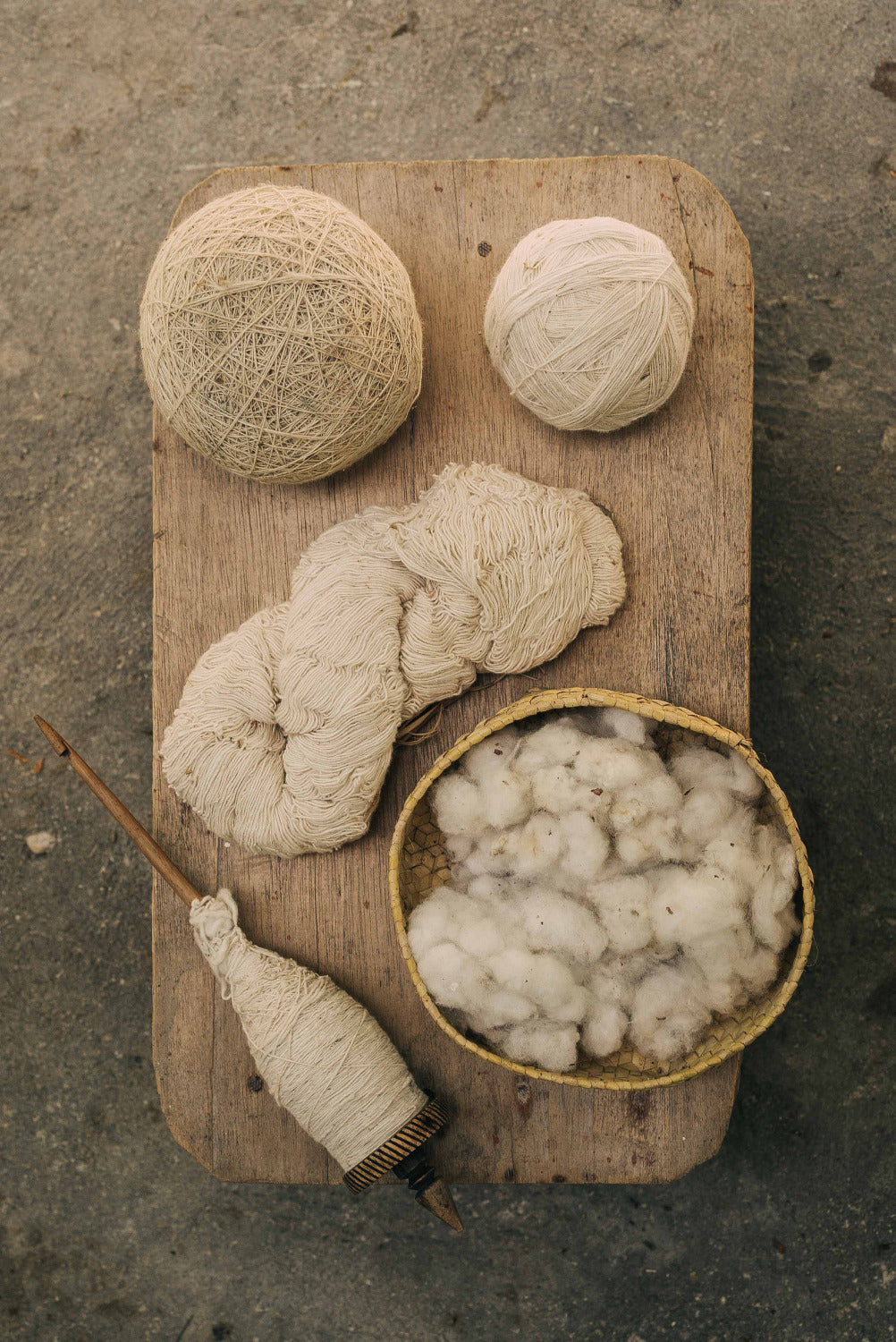
Our woven textiles begin with cotton that is organically cultivated, unbleached, and locally grown in Indonesia.
Organically cultivated means grown without synthetic pesticides, herbicides, or GMO seeds — relying instead on crop rotation, natural pest management, and soil-preserving practices.
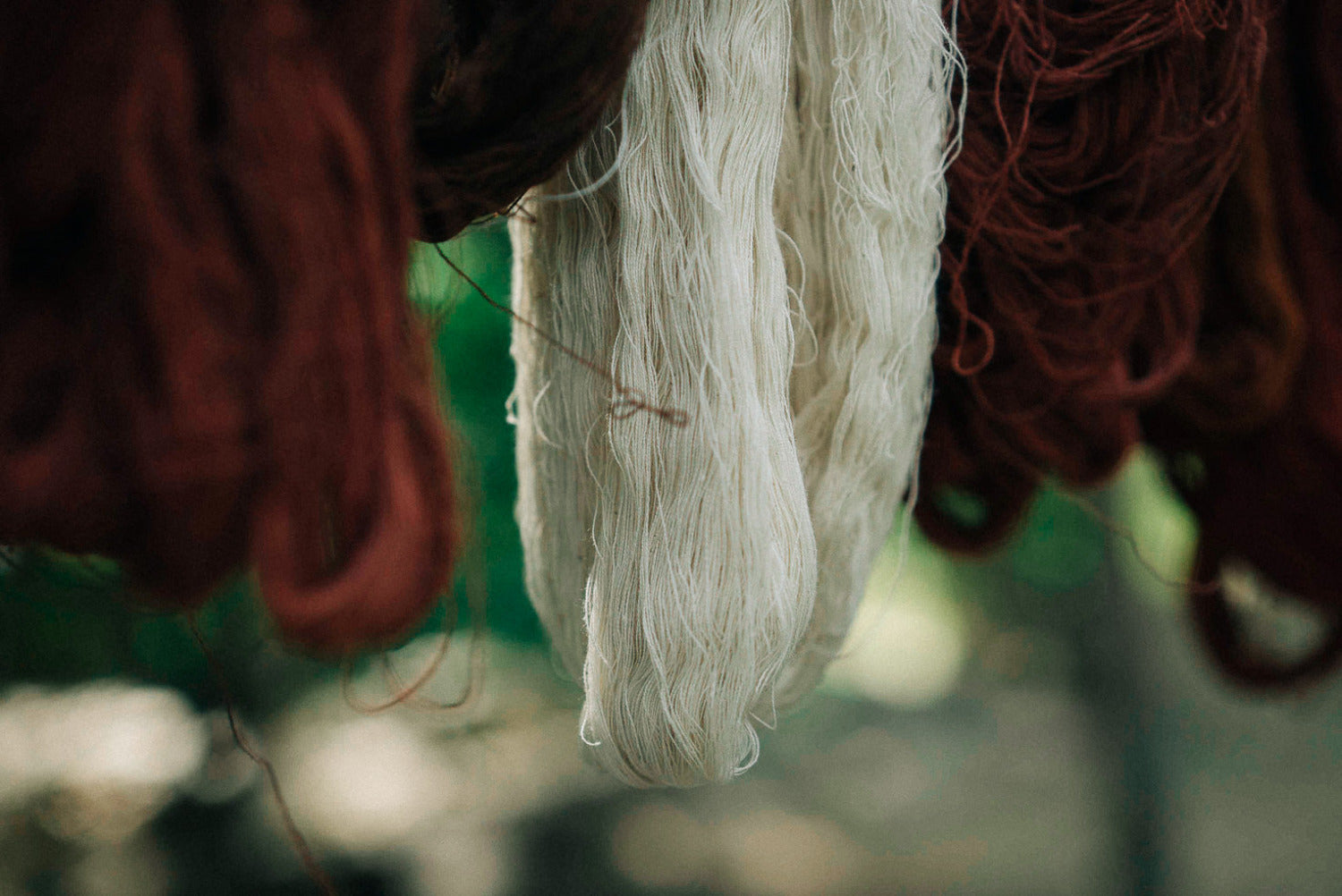
Unbleached cotton means the fibre is not chemically whitened before dyeing. It retains its natural cream tone and fibre integrity.
This results in:
- Fewer chemical processing stages
- Reduced water contamination risk
- Greater fibre integrity
- A warmer base for plant dyes
Organic certification systems can be valuable, but they are often costly and administratively complex. For small-scale farmers and artisan communities, certification fees and compliance systems can place real strain on enterprise sustainability.
Rather than redirecting resources toward certification bureaucracy, we prioritise:
- Direct relationships
- Transparent sourcing
- Long-term partnership
- Small-batch accountability
Despite not pursuing formal certification for these woven textiles, we strive to adhere to organic cultivation processes in practice — supporting growers who work without synthetic chemical inputs and preserving soil health through traditional farming methods.
Our decision is not a rejection of standards. It reflects the reality that many certification structures are designed for larger-scale industrial supply chains.
Plant-Based Dyes & Indonesian Botanics
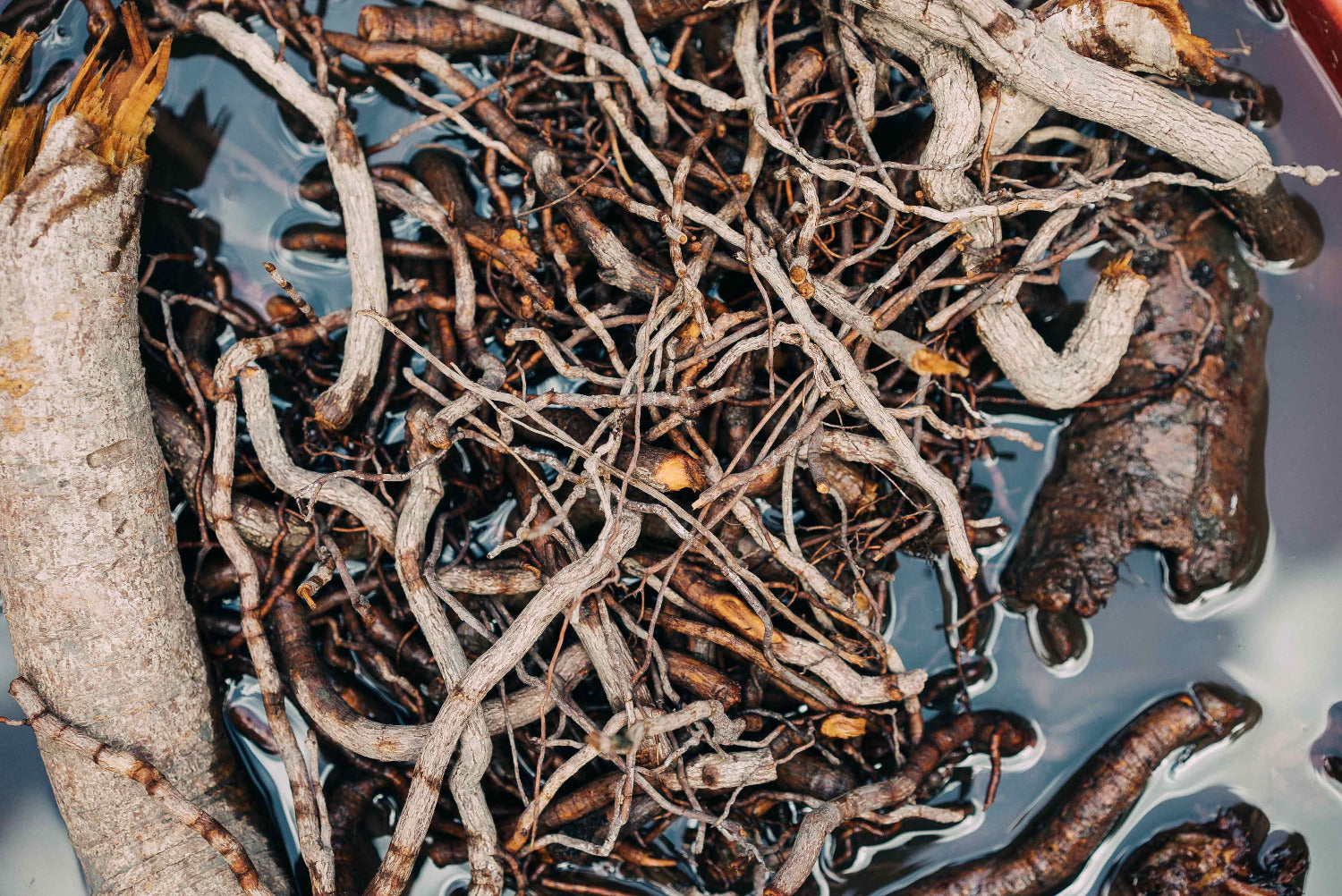
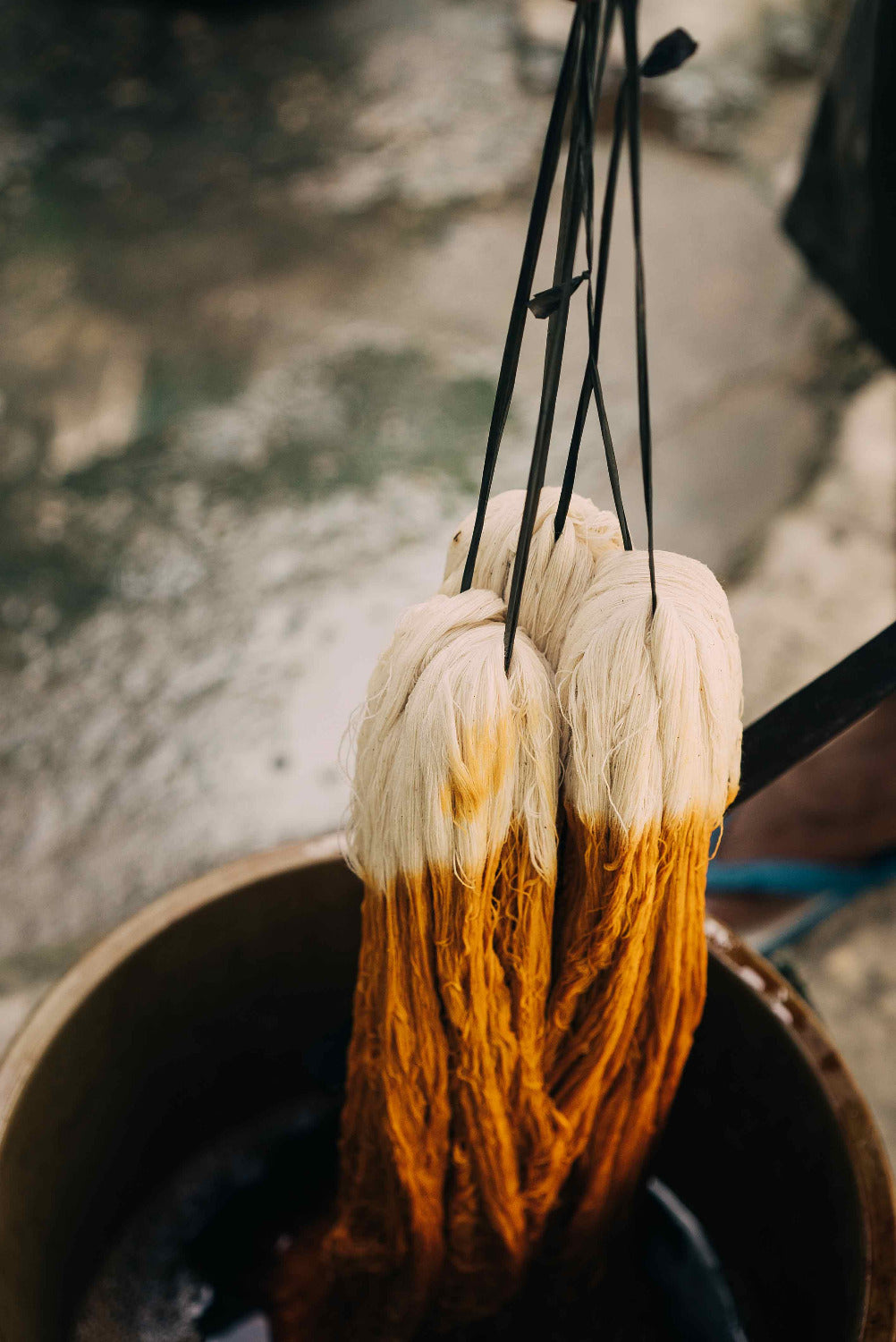
Our colours are derived exclusively from plant dyes extracted from flora found locally to the artisan communities we work with — leaves, bark, roots, seeds, and flowers shaped by Indonesia’s regional ecology.
Plant dyeing is slower by nature.
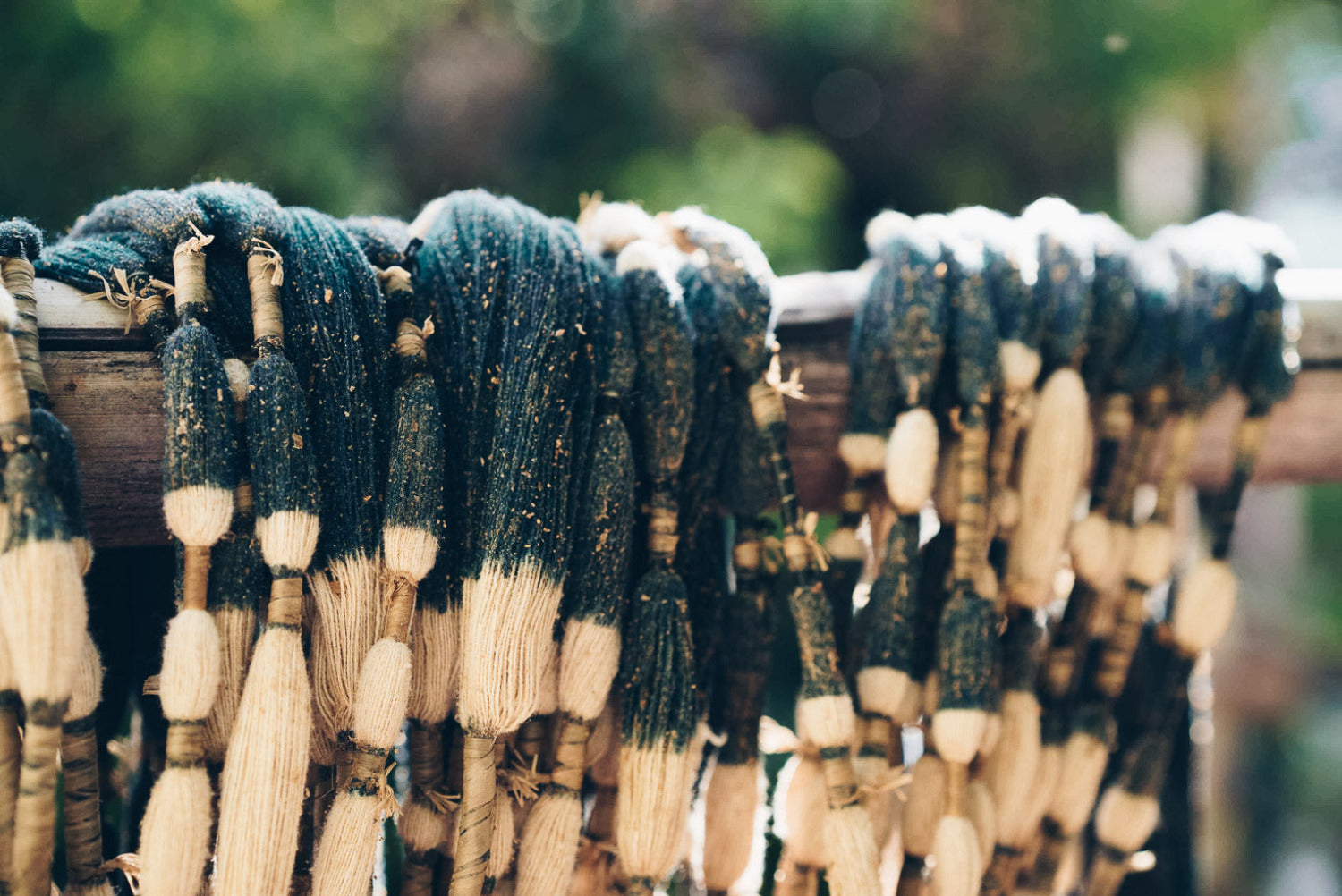
Colour is extracted through boiling, soaking, fermenting, and filtering botanical matter before yarn immersion. After dye baths, yarns are dried in the sun — making colour depth partially dependent on weather conditions and seasonal light intensity.
Natural mordants bind pigment to fibre. The type and concentration of mordant — combined with humidity and sun exposure — influences how colour is absorbed and fixed.
Climate is not an obstacle.
It is a collaborator.
Sun, Season & Variation
Natural variation in our textiles occurs because cotton is unbleached, plant dyes vary by botanical harvest, and yarns are sun-dried after dyeing.
Weather conditions influence oxidation. Natural mordants affect how pigment is absorbed and locked into the yarns.
Variation can be influenced by:
- Seasonal harvest shifts
- Sun intensity during drying
- Humidity and climate
- Mordant composition
- Small-batch dye immersion
Production during dry season yields different tonal outcomes than production during wetter months.
Colour depth may shift subtly between batches — not due to inconsistency, but because nature does not produce identical conditions twice.
Variation is not defect.
It is evidence of hand, climate, and time.
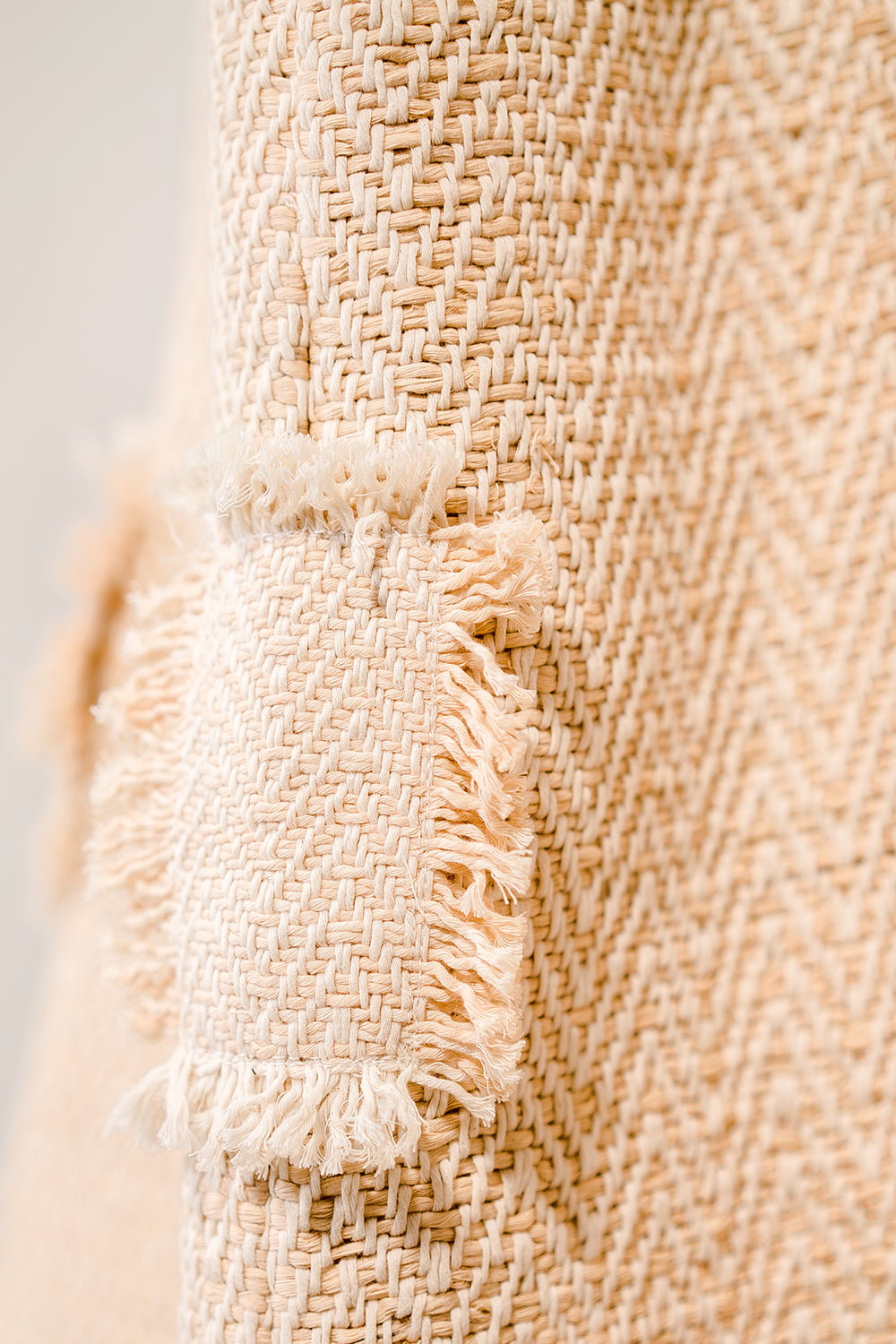
How Natural Fibres Behave Over Time
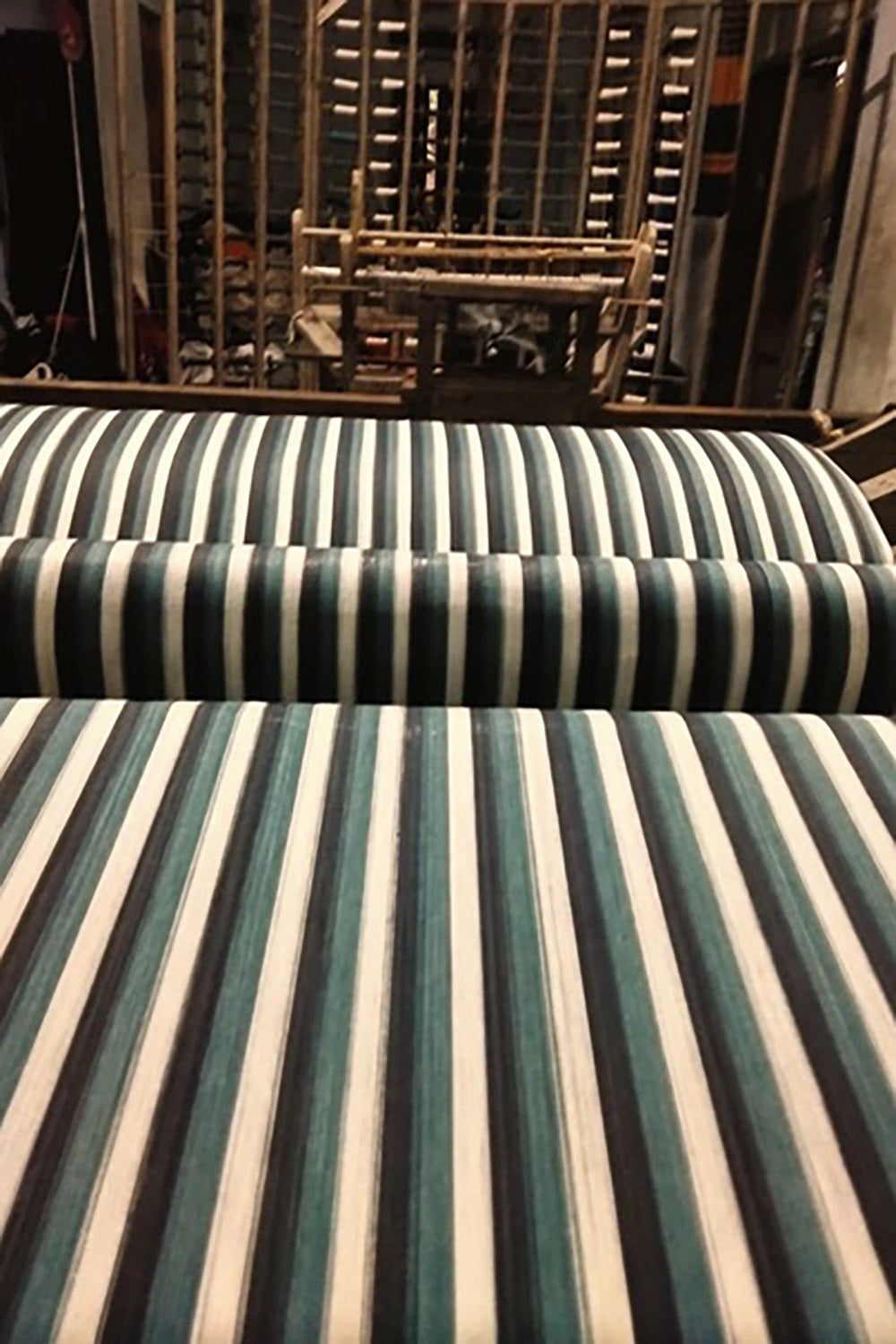
Natural fibres soften with wear. Plant dyes mellow gradually. Textiles evolve rather than degrade abruptly.
This encourages repetition — the foundation of seasonless dressing, where fibre choice becomes increasingly important in a smaller, practical wardrobe designed for frequent wear.
By contrast, many industrial synthetic fibres and chemical dyes are engineered for visual uniformity and mass consistency. These systems prioritise standardisation and speed.
The distinction is not moralised.
It is material.
Natural systems behave differently from industrial ones.
Explore the Foundations
Use these pages as a reference for how we design, source, and make.
What does 100% organically cultivated, unbleached cotton mean?
It means the cotton is grown without synthetic pesticides or genetically modified seeds, and the fibre is not chemically bleached before dyeing. The cotton retains its natural tone and fibre integrity. We prioritise direct farmer relationships rather than formal certification because certification costs can place financial strain on small-scale producers and artisan enterprises. Despite this, we strive to adhere to organic cultivation processes in practice.
How does this differ from conventional cotton?
Conventional cotton farming typically relies on synthetic pesticides and chemical fertilisers, and bleaching processes often involve additional chemical treatment before dyeing.
Organically cultivated, unbleached cotton reduces chemical processing stages and retains fibre integrity — resulting in breathable garments that respond more naturally to climate and wear.
Material choice shapes longevity, comfort, and ageing.
Do plant dyes fade?
Plant dyes do not fade abruptly. They soften gradually over time, influenced by washing frequency, sun exposure, and use.
This mellowing is part of their material behaviour — much like natural fibres softening with wear.
With appropriate care, botanical colour remains stable while developing depth.
View the care guide.
Why are colours slightly different between batches?
Colours vary slightly because botanical harvests, sun intensity, humidity, and dye immersion conditions are never identical.
Each batch reflects a specific climate moment.
Consistency in process does not mean uniformity in outcome.
Materials that breathe with you
Seasonless. Breathable. Made to be worn often and kept.
Natural fibres regulate temperature through airflow.
They soften through repetition.
They carry the imprint of time rather than resisting it.
For us, material choice is not a trend decision.
It is the foundation of continuity — in craft, in partnership, and in everyday life.
Wearable pieces rooted in slow craft.