



There's a tendency to treat handmade objects as things to be careful with. To display rather than use. To bring out for guests and put away after. It's an understandable instinct — if something took time and skill to make, the logic goes, it should be preserved.
But most handcrafted objects were never made for a shelf. They were made for a table, a kitchen, a hand. The distinction matters, and it changes how you think about what belongs in your home.
The difference between objects made to display and objects made to use
Artisanal home decor has developed a reputation for being decorative first and functional second. Ceramics too precious to eat from. Textiles folded and stored. Baskets used as props. This is, in most cases, a misreading of what the object actually is.
A bowl shaped by hand on a wheel in Klipoh village — where Pak Supoyo and his daughter Arum continue a pottery lineage that predates modern Indonesia — was made to hold food. The irregularity in its rim is not a flaw to be protected. It's the record of a hand at work. It becomes more itself the more it's used.

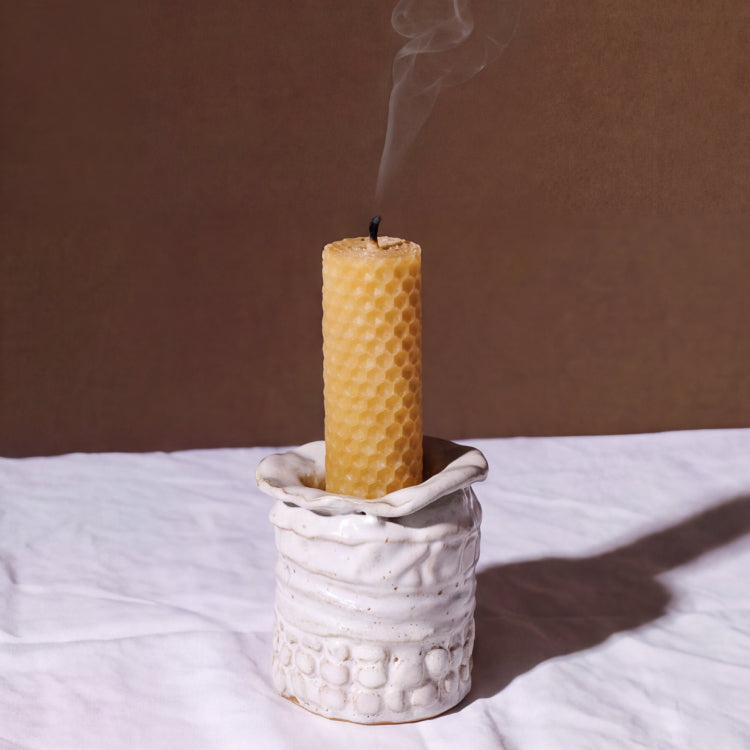
The same is true of a handwoven textile used as a table runner, a beeswax candle burned slowly over an evening, a basket that carries things rather than sits empty. These objects don't diminish with use. In most cases they improve. The patina of a well-used handmade object is earned, not simulated.
The distinction between decorative and functional craft is largely a product of how objects are sold, not how they were made. Most traditional craft traditions were built around utility. That's worth remembering when deciding what belongs in your everyday home.
What natural materials do differently over time
Mass-produced homewares are typically engineered for consistency. A machine-made ceramic bowl looks the same on day one as it does five years later — or it doesn't, because the glaze has chipped or the material has degraded in ways that read as damage rather than character.

Natural materials behave differently. Beeswax softens and pools with heat, releasing its warm, honey-edged scent more fully as it burns — ours are hand-rolled in our Perth studio using beeswax sourced directly from Western Australian beekeepers, a process that keeps the material's natural texture and variation intact. Organically cultivated unbleached cotton softens with washing, the weave settling into itself over time. Handwoven textiles — like those produced by Ibu Sukinah and the Lorek Weavers collective in Klaten using natural plant-based dyes → — shift in colour as the dye interacts with light and air over months and years. Not fade. Shift.
Clay shaped by hand and fired without industrial uniformity holds heat differently to cast ceramics. The variation in wall thickness that a machine would correct for is, in a handmade piece, part of its thermal character.
None of this is precious. It's simply what materials do when they haven't been processed out of their nature. Objects made from natural materials are participants in the life of a home, not bystanders to it.
What it means to choose slowly made objects
Choosing handcrafted homewares is not primarily an ethical act, though the ethics are often sound. It's a practical one. Slowly made objects are made to last — not because slow production is inherently superior, but because the people making them have a stake in the outcome that industrial production doesn't require.
A potter who shapes each piece by hand is accountable to the object in a way that a factory line isn't. A weaver working within a community tradition is producing something that carries the reputation of that tradition. This accountability tends to produce objects of consistent quality, even when — especially when — they vary in appearance.
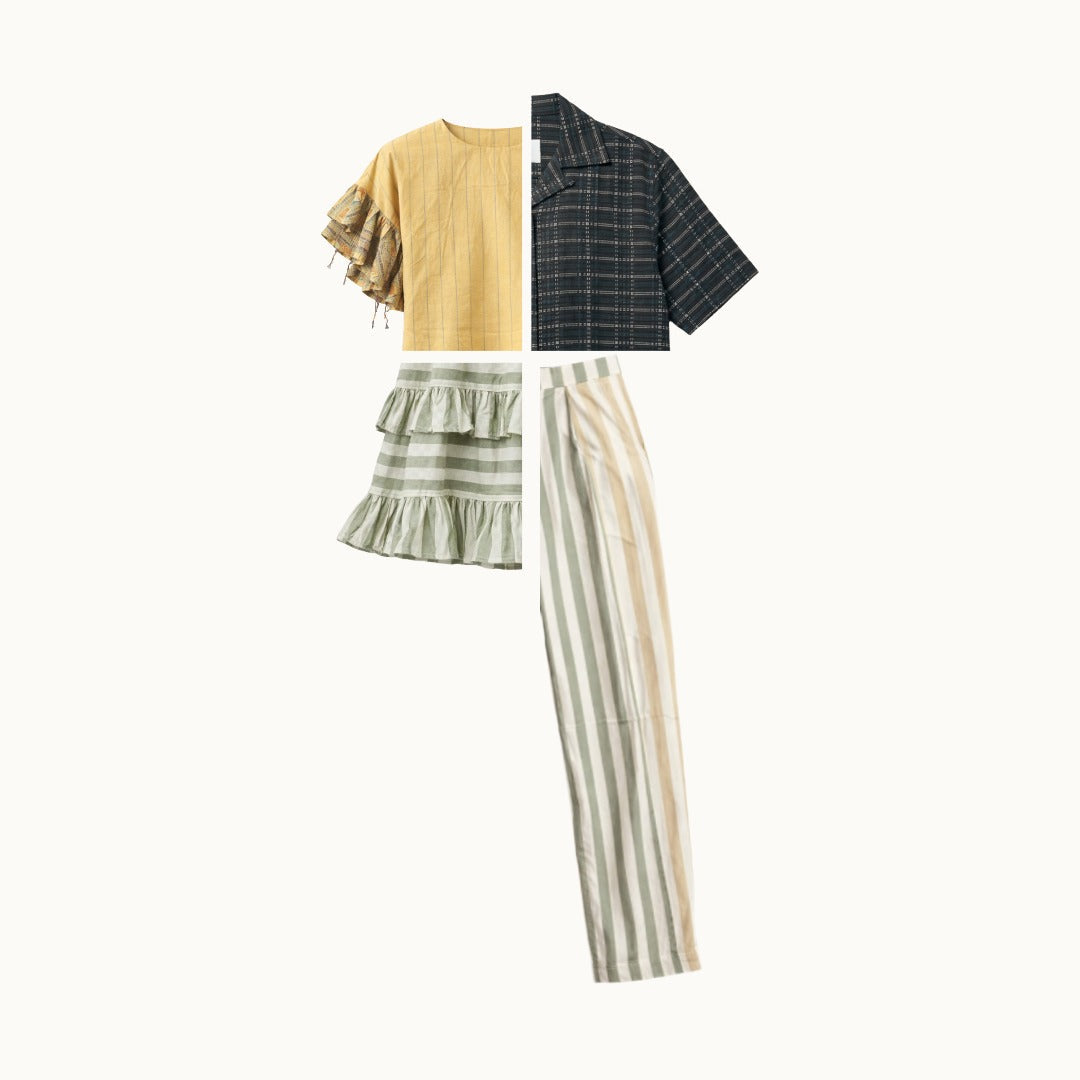
For those looking for ethical home decor in Australia, the more useful question is less about certification and more about traceability: do you know who made it, where, and under what conditions? That specificity is what separates a meaningful purchase from a well-marketed one. The practical outcome is also fewer replacements. A handwoven textile that costs more upfront and lasts a decade is a different proposition to a machine-woven equivalent that pills after two years. The maths tends to favour the slowly made object over time, in the same way it does for clothing built to last →.
Why handcrafted homewares from Indonesia carry a different kind of value
Indonesia has one of the richest living craft traditions in the world. Not as a heritage to be preserved behind glass, but as a set of active skills, communities, and material knowledges that are still being practiced, passed on, and evolved.

Pak Supoyo's pottery in Klipoh village draws on techniques shaped by proximity to Borobudur — the 9th century Buddhist temple complex whose aesthetic influence is legible in the region's craft to this day. His daughter Arum works alongside him, learning and extending the lineage. The pieces they make celebrate what a machine would reject: irregular forms, surface variation, the quiet marks of a hand at work. You can explore the Klipoh Potters' range → and read more about the communities behind RŪPAHAUS on our artisans page →.
Choosing handcrafted home decor from Indonesian artisans is not a charitable act. It's a recognition that the object in your hand has a history — a specific place, a specific person, a specific set of skills — and that this history is part of what makes it worth having.
How to build an everyday home with less
The case for handmade homewares is also a case for fewer things. Not as a minimalist position, but as a practical one. A home built around objects that last, that improve with use, that carry some meaning — requires less of them.
The replacement cycle that drives most homeware purchasing is a function of objects that don't hold up. When a ceramic bowl chips at the rim after a year, it gets replaced. When a textile thins and fades after a season, it goes in a bag. The accumulation is not intentional. It's the natural result of objects that weren't made to last.

An everyday home built around handcrafted objects — a few pieces used daily, chosen for how they feel in the hand as much as how they look — tends to be quieter. Less to manage. Less to replace. The objects earn their place not by being displayed but by being used, every day, until they're worn into exactly what they should be.

Share:
Natural vs Synthetic Fabrics: What Actually Matters?
How Plant Dyes Are Made: From Root to Fabric