




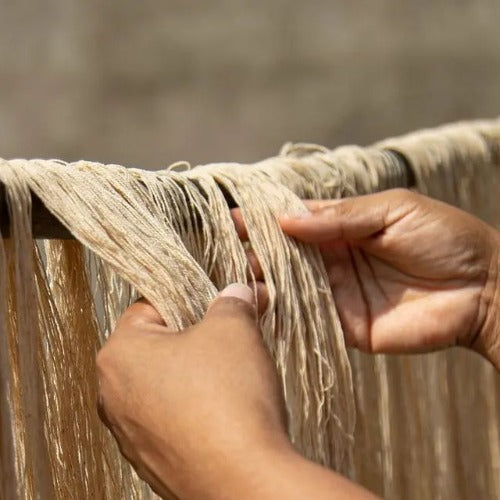
Fabric choice affects comfort, longevity, environmental impact, and how clothing performs over time.
Natural fibres such as cotton, linen, silk, and wool offer breathability, biodegradability, and ageing characteristics that differ significantly from synthetic fibres. Synthetic fibres such as polyester and nylon offer durability and performance benefits but may contribute to microplastic shedding and heat retention.
The most responsible wardrobe decisions balance:
• Fibre behaviour
• Climate suitability
• Longevity
• Intended use
This guide explains what actually matters — without extreme positioning.
For a deeper overview of fibre behaviour and plant-based dyes, explore natural fibres & plant dyes →
What Are Natural Fabrics in Clothing?

Natural fabrics in clothing are fibres derived from plant or animal sources, including cotton, linen (flax), silk, and wool.
They are valued for:
• Breathability
• Moisture absorption
• Softening with wear
• Biodegradability under correct conditions
Their structure allows airflow through fibres rather than trapping heat.
What Are Synthetic Fabrics in Clothing?

Synthetic fabrics are man-made fibres created from petroleum-based polymers such as polyester, nylon, acrylic and elastane.
They are often used because they are:
• Durable
• Stretch-compatible
• Cost-effective
• Resistant to wrinkles
However, they behave differently in wear and washing cycles.
Breathability: Why It Matters
Breathability refers to airflow through fabric.
Natural fibres tend to:
• Absorb moisture
• Allow evaporation
• Regulate temperature
Synthetic fibres often:
• Trap heat
• Retain odour
• Rely on surface treatments for moisture management
For warm or humid climates, breathability significantly impacts comfort.
Fabric behaviour becomes especially important when clothing is chosen for real daily movement, a principle explored in dressing for real life.
Microplastics and Washing Impact
Research widely cited in sustainability reports indicates that synthetic garments may shed microfibres during washing.
These microfibres can enter waterways. While filtration technology is improving, fibre choice remains relevant. However, this does not mean synthetics are universally harmful. Context matters.
Durability Myths
It is often assumed that synthetic fabrics are more durable. In reality high-quality cotton, linen, and wool can last many years when cared for properly. Durability depends on:
• Fibre quality
• Weave density
• Finishing process
• Care habits
See care recommendations here.
When Synthetics Have a Role
Performance wear often relies on synthetics for:
• Stretch
• Moisture wicking
• Abrasion resistance
In certain contexts, blended fabrics can offer practical benefits. The key question is not “natural vs synthetic” in isolation. It is: Is this fibre suited to its intended purpose?
The Fibre Matrix

Use this simplified matrix:
Cotton
Best for: Everyday wear, warm climates
Strength: Breathable, versatile
Limitation: Can wrinkle
Linen
Best for: Hot climates
Strength: Airflow
Limitation: Creasing
Silk
Best for: Transitional layering
Strength: Lightweight insulation
Limitation: Delicate care
Wool
Best for: Cool climates
Strength: Insulation, structure
Limitation: Requires proper storage
Polyester
Best for: Performance contexts
Strength: Durability
Limitation: Heat retention
Longevity and Seasonless Design

Natural fibres often soften and develop character over time. Synthetics may maintain structure longer but may not evolve in the same way. Seasonless clothing prioritise fibres that:
• Adapt across climates
• Age gradually
• Encourage repetition
Fibre durability becomes more important when wardrobes prioritise fewer garments worn more frequently.
Common Mistake: Moral Absolutism
Not all natural fabrics are automatically sustainable. Not all synthetic fabrics are automatically harmful. Fibre farming practices, dye processes, production systems, and lifespan all matter. Material literacy requires nuance.
Frequently Asked Questions
Are natural fabrics better than synthetic fabrics?
Natural fabrics often provide greater breathability and comfort, while synthetic fabrics can offer durability and stretch. The best choice depends on climate, garment purpose, and longevity expectations.
Are natural fabrics always more sustainable?
Not automatically. Production methods and longevity determine impact.
Is polyester always bad?
Polyester has performance benefits but may contribute to microplastic shedding.
Do natural fabrics last longer?
When high quality and properly cared for, yes — often significantly.
Closing Reflection
Fabric choice shapes how garments behave. Breathability, longevity, and climate compatibility matter more than trends. A considered wardrobe begins with fibre understanding.
Explore fibre depth at Natural Fibres & Plant Dyes →

Share:
The True Cost Per Wear: Why Repetition Is Sustainable