

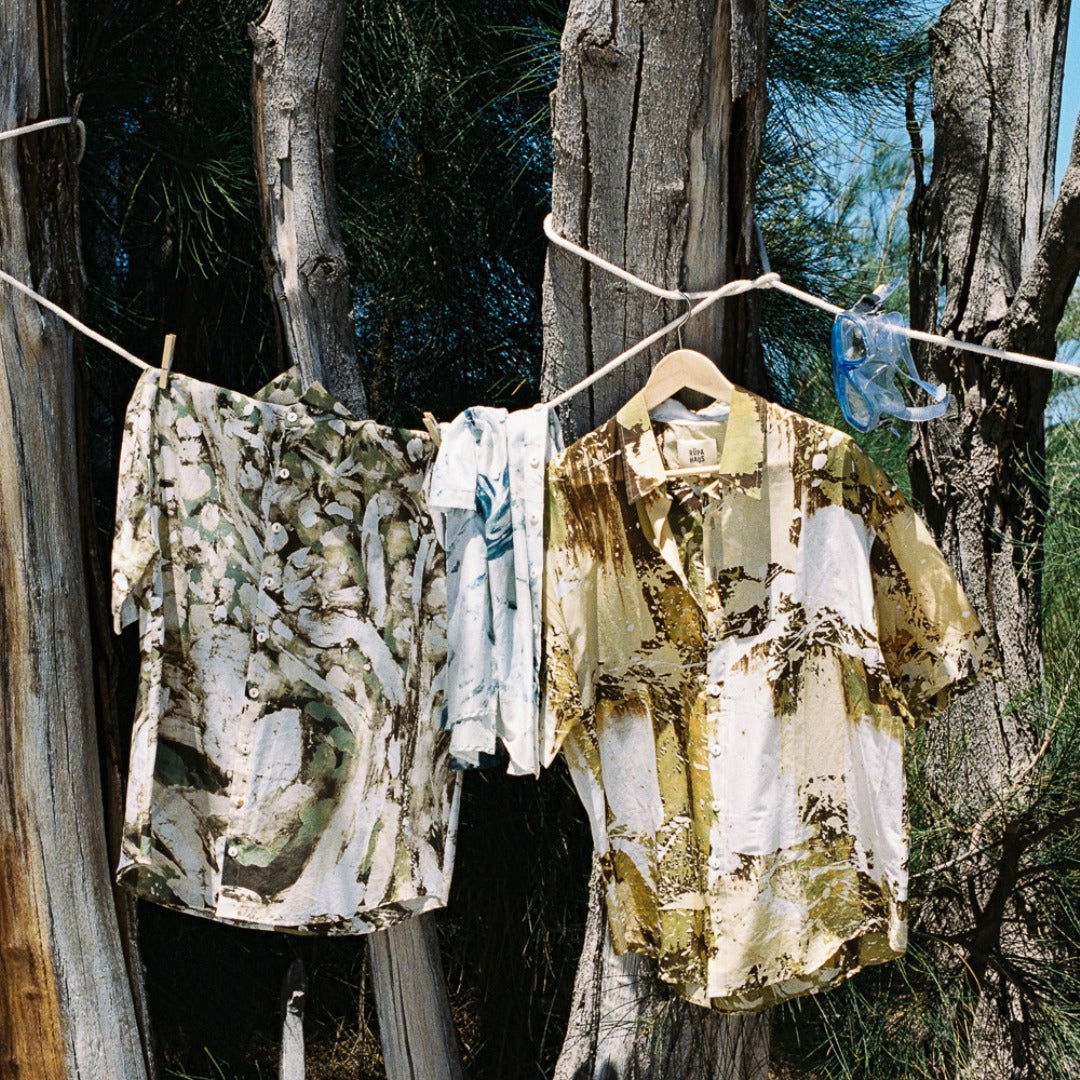
At RŪPAHAUS, small batch isn't a marketing claim — it's the physical limit of what hands can produce in a season. Some of our most-loved pieces have only ever existed in runs of 12 or 20. When a design sells through, there's no reorder to place.

What small batch means, in numbers
Some pieces we've made only 12 of. Others, 20. Split across our four sizes, that's three to five pieces per size, in the world, ever — and the split isn't always even, because supply follows what actually comes off the loom, not what a size chart wants. That's not a business strategy. It's the literal output of a loom, a cutter, and a maker working through a single season.

Why we can't just reorder
RŪPAHAUS is an Australian brand founded by an Indonesian woman in Perth. That's the reason the sourcing looks the way it does — not because we bought into a distant aesthetic, but because our founder Stephanie goes to each collective in person. She sits in the studios. She knows the weavers, dyers, cutters, and seamstresses by name. Being Australian-based lets us serve our customers here directly; being Indonesian-founded lets us source at a depth most brands can't reach. That bridge is the whole thing.
Because of that depth, we won't push a weaver to reproduce cloth their hands aren't ready to make again. We won't rush a batch to hit a restock date. We won't reorder cloth that ran out because the season ended, the weaver moved on, or the cloth simply doesn't exist anymore in that exact weight and pattern.

The Marc dress
Take the Marc dress — one of our most popular styles. The few remaining Marc dresses on our website now are the last we'll ever make. We're not continuing the design. Not because it didn't sell — it sold well. Because the cloth has run out, and small batch means small batch.
What this means for you
If you own something from RŪPAHAUS, you own something that exists in a very small run — often fewer than 20 pieces in the world. When a design ends, it ends. You didn't miss out. You joined a wave. And the wave passed.
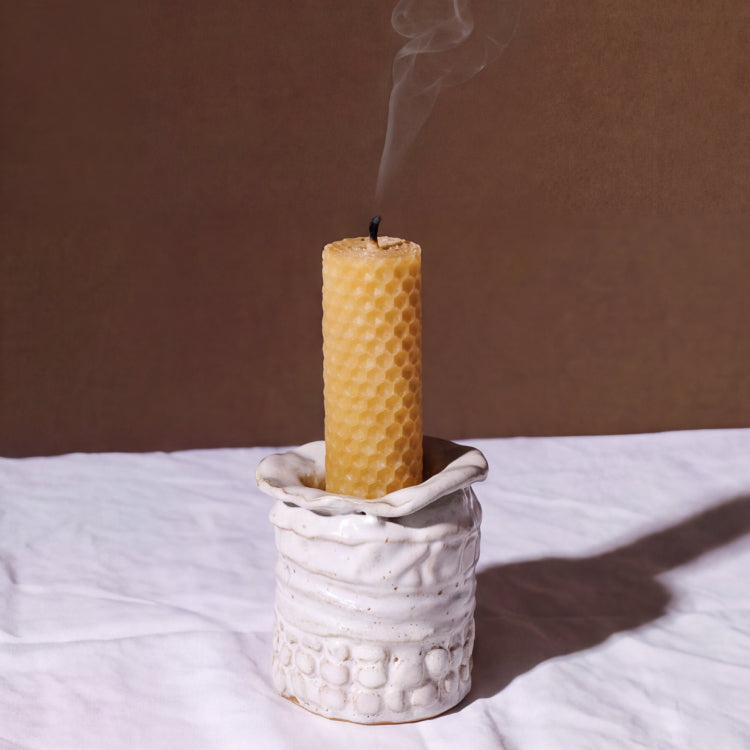
Made once, not twice. That's not a slogan. That's the whole production reality. The same principle runs through the candles we make in Perth — small batches, no reorder, one shape at a time.
We made a shorter version of this for TikTok too, if you'd rather watch it than read it — E6 is live today.
Frequently Asked Questions
What does "small batch" mean at RŪPAHAUS?
It means a literal output limit — some designs are made in runs of just 12 to 20 pieces, split across four sizes, because that's what hand-weaving, cutting, and sewing can produce in a season.
Why doesn't RŪPAHAUS reorder popular pieces?
Because the cloth itself often can't be remade to match — a weaver's season ends, the exact colour or weight isn't available again, or the maker has moved on to other work. RŪPAHAUS doesn't rush that process to meet demand.
See what's left while it's still here.

Share:
The Other Things We Make: On Handrolled Beeswax Candles
Trying to Be in More Rooms — Why We Joined Faire