


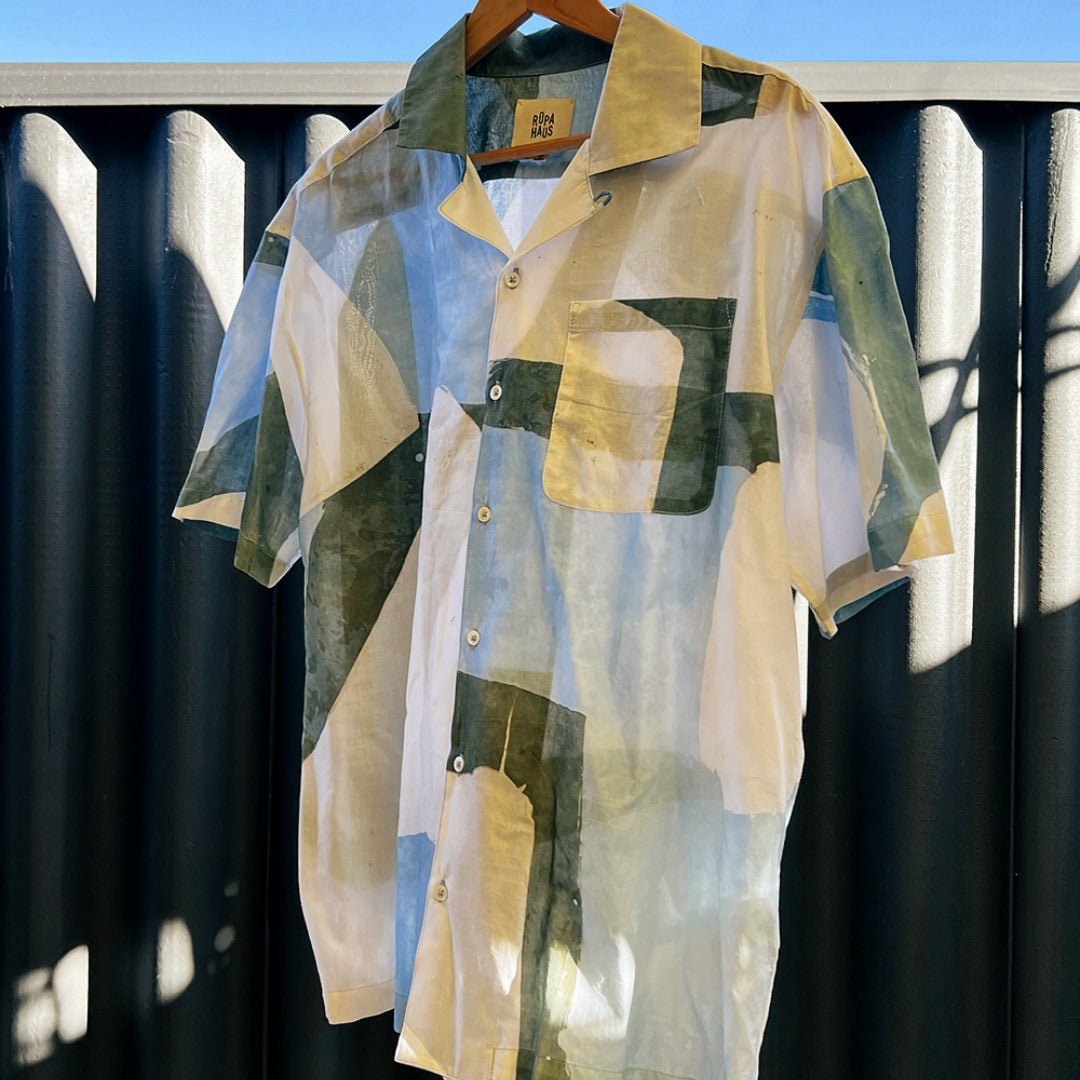
There's no discount code in this post, and nothing here expires on Sunday. Father's Day at RŪPAHAUS isn't a sale — it's a reason to properly explain three menswear pieces we don't talk about often enough, what they're made of, and who made them.
Why We're Not Doing a Countdown
We rarely discount, and a gift edit built around urgency would say the opposite of what we actually believe: that a piece worth giving is worth explaining properly, not marking down.
So this isn't "10 days left" — it's just the pieces themselves, and enough detail to make the choice easy without rushing it.
 The Case for the Abbe Shirt
The Abbe Shirt is a relaxed, straight-cut everyday shirt with a classic collar and structured cuffs — the kind of piece designed to be worn often rather than saved for one occasion. It's woven on traditional pedal looms by the Lorek Weavers, from 100% organically cultivated, unbleached cotton.
One customer, Kevin H., put it plainly in a five-star review: "Men's shirt ultra comfortable and unique fabrics not available anywhere else."
That's the pitch, really — a shirt that still feels worth reaching for the fiftieth time you wear it, not just the first.

What He Actually Wears It With
The Abbe pairs easily with denim or plain trousers for everyday wear, or tucked in for something a little more polished. If you want to give him a choice rather than a single shirt, the Alba Camp Shirt in Dawn is cut from a single 3-metre panel of handwoven cotton by the Kanekes Weavers on backstrap looms in the forested hills of West Java. A limited run, so the texture shifts slightly from piece to piece.
For something with more colour and pattern, the Alba Batik Camp Shirt is hand-painted using batik tulis by the Batik Painters in South Yogyakarta, so no two shirts carry the same markings.

Care Instructions for Something Meant to Outlast the Occasion
A cold hand wash (or a gentle cold machine wash if that's more realistic), air-dried flat or hung in shade, and a warm iron if he wants one — no dry cleaning needed. Because these are naturally dyed with plant-based colour, expect gentle tonal variation and a little initial crocking that eases with wear and washing. That's not a flaw to manage around; it's what real dye behaves like, and it's covered in full in our care guide.
If you'd like to see how each one is made, all three are shown in full on their product pages — worth a proper look rather than a quick add-to-cart, since that's rather the point of giving one of these.

Share:
'One Size Fits All' Is a Lie (Sometimes)
We've Started Designing Again — A Founder's Note