


You style handwoven clothing by getting three things right.
Size it for room to move, layer it for the weather you actually have, and let one textured piece carry the outfit while everything else stays quiet.
Handwoven cloth has more surface and more presence than a flat machine-made fabric, so it does the work — you do not need to style around it. Most days that means a handwoven jacket or kimono over something plain, trousers that let you walk and sit and drive, and shoes you already own. The cloth is the point. The rest gets out of its way.
Start with fit, not the outfit
The first styling decision is the size, and with handwoven pieces it is worth slowing down on.
Handwoven cloth sits and moves differently from a fitted, stretch-blend fabric. It has body. It drapes from the shoulder rather than clinging, and it reads best with a little room rather than pulled tight. If you are between sizes, the larger one is almost always the one that earns its keep — a jacket you can layer under, a kimono that falls open and moves, a top that skims instead of pulls. You stop noticing a piece that fits your day, and that is the goal.
If you are buying without trying it on, this is the part to get advice on. Tell us what you usually wear and how you like things to sit, and we will point you to the size that holds up over a season rather than just on the first morning.
Layer for the weather you actually have

A handwoven jacket is a winter workhorse if you let it layer. Over a fine-knit jumper on a cold start, over a shirt as the day warms, sleeves pushed back when you are inside — one piece, three versions of the day.
The Kiri trousers works the same way: wide enough for a thermal underneath on the coldest mornings, plain enough that the jacket or kimono stays the thing people notice. In a Perth winter, where the morning is genuinely cold and the afternoon forgets it ever was, the trick is pieces you can open and close rather than a single heavy layer you are stuck inside all day.
Let one piece lead

The mistake with textured, plant-dyed cloth is trying to match it. You do not have to.
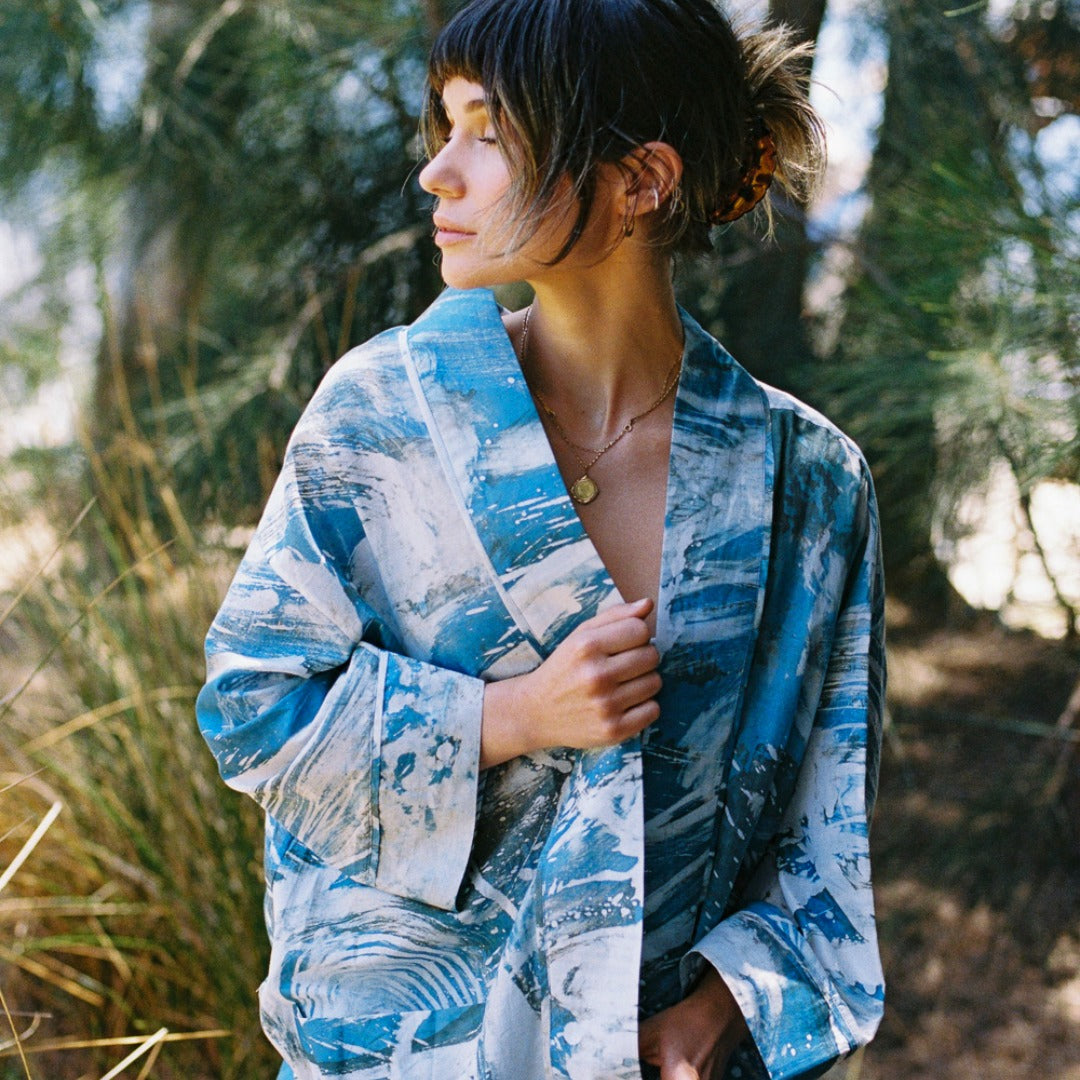
Pick the handwoven piece as the lead — the jacket, the kimono, the Aria shirt in its plant-dyed colour — and keep the rest plain and tonal. A neutral underneath, a trouser in one colour, no competing pattern. The variation in the weave — the knots, slubs, and slight irregularities that are structural to how handwoven cloth is made — is the detail doing the visual work. Against a quiet background they read clearly; against a busy one they get lost. This is why a single handwoven piece dresses an otherwise ordinary outfit, and why you can wear the same one often without it feeling like a uniform — the cloth shifts slightly in different light, so it never reads exactly the same twice.
A week of outfits from a few pieces

In practice, a small handful of handwoven pieces covers most of a winter week without ever feeling like the same outfit.
A handwoven jacket over a fine knit and the Kiri trousers is the cold-morning default — warm, easy, nothing to think about. Swap the knit for a plain shirt and the same jacket reads sharper for anything that needs a little more. On a milder day, the kimono open over a simple dress does the same job with less weight. And when you want the cloth itself to be the whole point, the Aria shirt in its plant-dyed colour worn on its own, trouser plain underneath, lets the weave and the dye carry the look.
Four pieces, four days, one quiet base each time. Because the cloth shifts in different light, none of them reads as a repeat — which is what makes a small run of handwoven pieces go further than a wardrobe twice the size.
Keep it wearable over time
Styling a piece for real life includes keeping it in the rotation for years, not one season.
Wash handwoven, plant-dyed cloth in cool water and dry it out of direct sun, and the colour settles and deepens instead of fading flat. A piece that softens with each wash gets easier to style, not harder — it drapes a little more, sits a little closer to lived-in, and slots into more of your days. The pieces that end up styled the most are the ones that have been washed the most
Frequently Asked Questions / FAQs
How do you style handwoven clothing?
Size it with room to move, layer it for the actual weather, and let one handwoven piece lead while the rest stays plain and tonal. The texture and plant-dyed colour carry the outfit, so you style with restraint rather than adding more.
Should I size up in handwoven pieces?
Usually, yes. Handwoven cloth drapes from the shoulder and reads best with a little room, so if you are between sizes the larger one tends to wear better over a season — especially for jackets and kimonos you will layer. If you are unsure, ask before you buy.
Can you wear handwoven pieces in winter?
Yes. A handwoven jacket or kimono layered over a fine knit is a cold-morning piece you can open as the day warms. Pair it with a wide trouser over a thermal for genuinely cold starts.
How do you style a handwoven jacket?
Let it lead. Keep what is underneath plain and tonal, push the sleeves back indoors, and let the weave and dye be the detail. It works over a jumper, a shirt, or a dress, in one colour family.
If you would like to see how the handwoven pieces layer through a real winter, the jackets and kimonos are in the womenswear range now, with the colourways currently woven. If you are sizing without trying on, send a note before you order — the right size is most of the styling.

Share:
We've Started Designing Again — A Founder's Note
What Makes Everyday Clothing Worth Keeping