


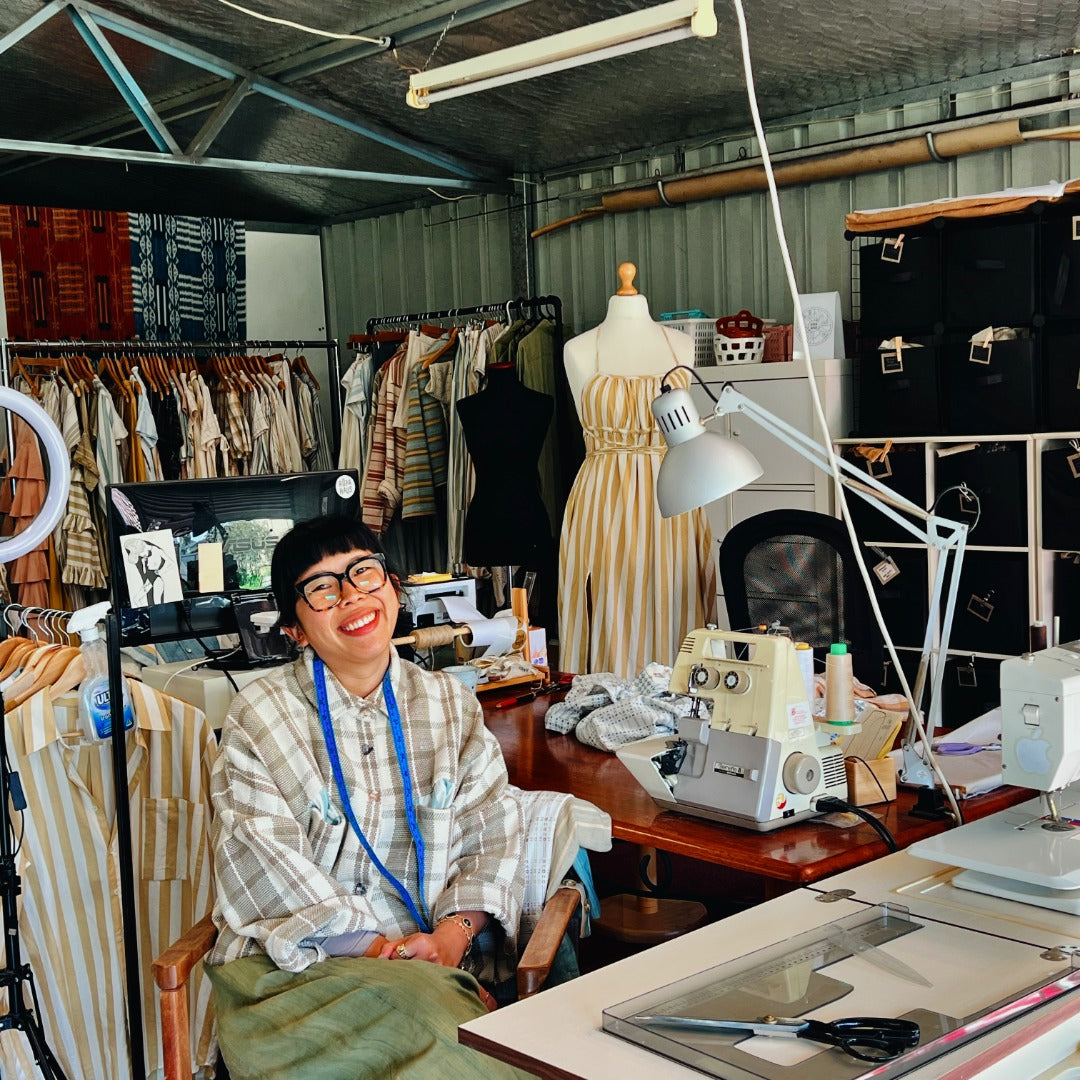
What it takes to run a small fashion brand is mostly the parts that never reach a product photo. The cloth — handwoven and plant-dyed in Indonesia — is maybe a third of the work. The rest is commercial and creative: deciding what to make and what to charge, marketing it, selling it, and meeting people in person where the customers actually are. RŪPAHAUS runs across two countries, and inside Australia across two cities — made in Indonesia, run from my desk in Perth, with the commercial and creative side in Melbourne. None of that shows up when you look at a dress.
The cloth is a third of it
The making is the part people picture, and it is real work. The handwoven cloth comes from the Kanekes weavers in West Java, through Sid. The plant dyeing is Ibu Sukinah's in Central Java, where Mbak Ratmi's collective weaves on pedal looms and the ceramics are made.
That side runs on the makers' seasons and a long shipping route, and I plan a season ahead around it. But if the cloth were the whole job, this would be a far simpler business than it is.
The two-thirds nobody sees
What actually keeps the brand alive is the commercial and creative work, and most of it happens in Melbourne, not Perth.
Addie is our commercial director. She sits across pricing, what we make and in what quantity, and the decisions that keep the numbers working — the difference between a brand that lasts and one that quietly runs out of room. Aya handles the creative and the social side: the images and the feed that are most people's first contact with the cloth.
Both are in Melbourne, where the customers and the in-person opportunities are concentrated. I am the founder, and the brand still runs through me, but I am not the whole of it. A dress that sells is the end of a chain that passed through three people and two cities before it reached you.
Two cities, two clocks
The time difference that matters is not the one people expect.
Java is only an hour behind Perth, so working with the makers was never a clock problem. Melbourne is the gap that counts — two hours ahead, already mid-morning while Perth is barely up. A lot of days start with the east coast already moving: Addie's questions waiting, Aya's posts going live, emails from customers whose day began before mine. The brand wakes up before I do, in a city on the other side of the country.
Working to the makers' seasons
On the making side, the constraint is the seasons, not the schedule I would choose.
There are weeks when Sid cannot be reached, because the Kanekes community has turned inward for harvest or for a ritual period, and that comes before any order of mine. Ibu Sukinah's dye palette shifts with what the plants give that time of year. I cannot bring any of it forward — so the commercial and marketing side has to plan around stock that arrives when it arrives. Holding those two rhythms together, makers who move with the seasons and a market that moves at its own pace, is most of the actual job.
Holding it together

There is no office. There is my desk in Perth, a phone with threads open to West Java, Central Java and Melbourne, and a school run that does not move for anyone.
A lot of the work happens in twenty-minute windows — before the kids are up, in a car park at three, after dinner once the day's decisions are finally made. It is not the version of running a label that gets photographed. It is the real one: spread across a making country, an operations city and a commercial one, with me in the middle trying to keep them in step.
Why I keep it this way
I could make all of this faster and flatter — machine cloth, a supplier I could reorder from on demand, everything in one city. The spread and the slowness are not faults I am working to fix. They are the shape of making this particular cloth and selling it honestly.
The makers set one pace, the market sets another, the distance sets a third. My job is to hold all three without dropping any of them, and to be straight with you about what that takes. It is the part of the brand I am most proud of, even though it is the part you were never meant to see.
Frequently Asked Questions / FAQs
What does it take to run a small fashion brand?
More than making the product. Alongside the cloth — handwoven and plant-dyed in Indonesia — there is the commercial side (pricing, range, the numbers), the creative and marketing side, and the in-person selling. For RŪPAHAUS that work is split across Perth and Melbourne, on top of sourcing from Indonesia.
How is a small fashion brand run day to day?
In short windows, across time zones and cities. The makers in Indonesia are an hour behind Perth; the commercial and creative side in Melbourne is two hours ahead. The founder sits in the middle in Perth, planning around the makers' seasons while the Melbourne side runs the marketing and the selling.
Share:
Who are the Kanekes weavers?
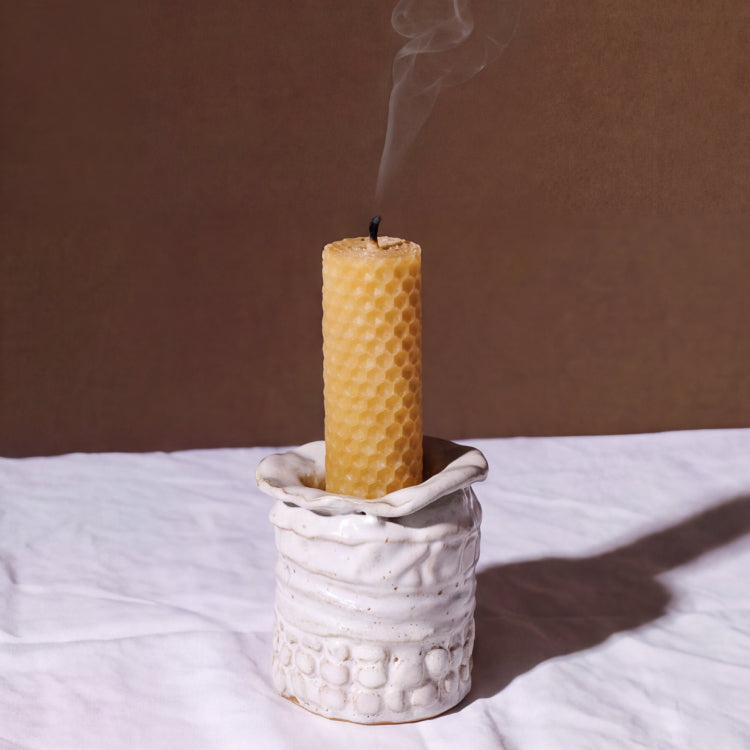
The Other Things We Make: On Handrolled Beeswax Candles