


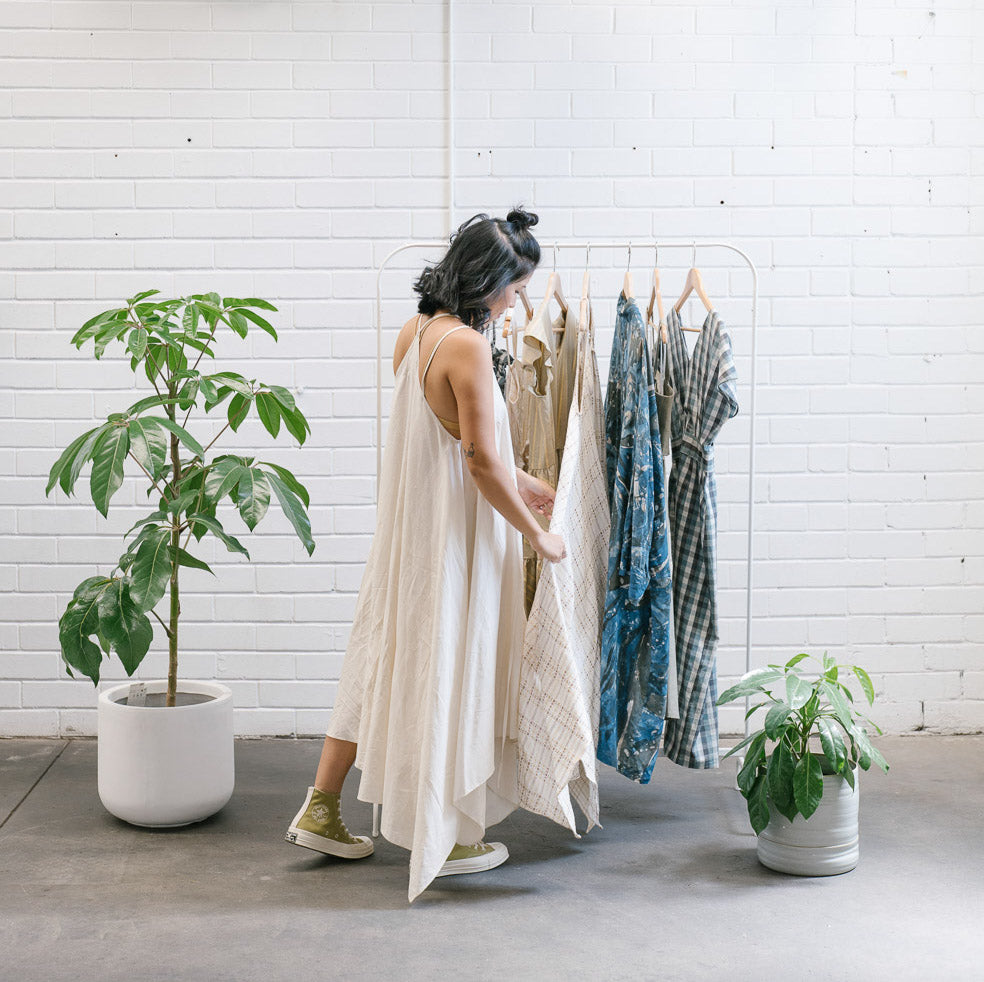
Composed by Adeline Chandra / Images courtesy of RŪPAHAUS unless state otherwise.
You've read and heard about it, and now you are ready to start your ethical and sustainable wardrobe - but only to find that your wallet doesn't necessarily agree with your decision? To tell you the truth, you are not alone!
Most of us, including ourselves, have pondered about why is ethical and sustainable fashion more expensive? The personal experience led us to where we are today, and we wanted to help you unravel the cost behind affordable ethical and sustainable fashion brand in Australia, like RŪPAHAUS.
It is basically a function of simple supply and demand.
Unfortunately, the globalised fashion world is the one responsible in creating the current supply and demand. This vicious cycle also created mass expectation of how much fashion should cost, that we can readily-access cheap, currently-in-trend clothes, and that we should have new collections every week equating to whooping 52 "micro-seasons" in a single year (McKinsey). So, when ethical and sustainable brands offer clothing that don't fit into this expectation, one would assume that they are not "attainable"; and subsequently reduce the general demand.
But with just a handful notable differences, the driver of high cost of ethical and sustainable fashion actually lies solely in how transparent and traceable the brand operation is.
Maybe rather than asking why is ethical and sustainable fashion more expensive, the real question we should ask is why is fast fashion so cheap?

Why is ethical and sustainable fashion more expensive | Affordable ethical and sustainable fashion brand in Australia
Why is ethical and sustainable fashion more expensive?
When you consider conventional fashion - or what the norm is when people think about fashion - there are a few main aspects which are heavily involved in the process of making fashion before they land in our wardrobe.- material, labour and production cost
- business operation cost
- economies of scale
 Material, Labour and Production Cost
Being an ethical fashion brand means that most of our cost is associated with ensuring fair remunerations for every person involved in our operations.
This allows us to be accountable for every steps taken in our ethical and sustainability journey - and ensures that our materials are environmentally-responsible and sustainably sourced, and ultimately minimising our footprints as low as possible; that we are trading ethically and fairly support the artisans’ communities; and that our products are lovingly handcrafted and sustainably packaged until its delivered to our customers.
Each of our fabrics are designed and made exclusively for RŪPAHAUS. We choose to work with organic fibres of 100% non-GMO raw cotton which were planted without excessive chemicals and pesticides, manually farmed by the local rural farmers and spun in Indonesian local non-GMO cotton plantation in East Java - and if you ask us why, it is simply because it is not only the most natural material but also it's ethically processed inside and out by workers who are fairly paid!
In Indonesia, the legal minimum wage is extrapolated based on the Decent Living Needs Index for a city (known as Kebutuhan Hidup Layak) and the annual inflation rate. Using this as the baseline value, our streamlined and transparent operation allows us to ensure that the artisans are fairly remunerated.
But what does fair mean? For us, it is an amount 6 times the average legal minimum wage across the artisans' cities, and therefore is 6 times greater than the recommended living wage.

For us, being ethical and sustainable brand is ultimately about redistributing wealth between every single person involved in the chain; from our consumers all the way to the artisans and the farmers, by taking an investment-oriented, conscious approach to fashion consumerism - which is not an easy thing to do in an economy like ours where ethics, fairness, inclusion and sustainability in fashion are radical positions, and the socioeconomic gap is ever so growing.
Business Operation Cost
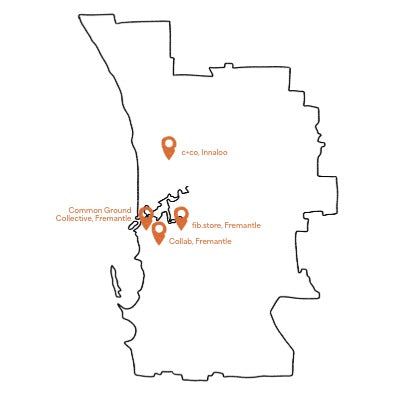
At RŪPAHAUS, we choose to operate primarily as an e-commerce supported with army of like-minded stockists around the globe such as Chia Byron Bay, Collab. in Fremantle, From Where I Stand and Uluwatu Surf Villas in Bali.
Not having a brick and mortar store allows us to reduce our business overheads significantly, and allowing us to apply pricing strategies that focuses on building our artisans communities.
Economies of Scale
As a way to keep its prices low, conventional fashion mass produces their stock even when there isn't a market for the quantity - essentially more stock produced, production fixed costs are spread across all of the units and ultimately reducing costly inefficiencies.
Slow fashion brands like RŪPAHAUS on the other hand usually are made to order; or produce limited amount of fabric run, out of which a small quantity of pieces are produced. Greater time and care are taken to produce a single piece, and these cost money.

 Affordable ethical and sustainable fashion brand in Australia
We know that searching for affordable ethical fashion brands in Australia can get tough - and we know for a fact because we had to go through so many google pages before we can come up with a decent list of brands ourselves.
We want to help you understand why is ethical and sustainable fashion more expensive and transform your mindset about the price tag.
Don't just take our words for it when we say that we are one of the most affordable ethical and sustainable fashion brands in Australia or even the world, because it is simply a conclusion we want you as our customer to make. Our job is to help you understand where your money goes when you make RŪPAHAUS purchase; and we can proudly say whether you buy from our stockists or our e-commerce website, the reasons behind the costs remain just as applicable.
 A few of the most affordable ethical and sustainable fashion brands in Australia or worldwide
- Everlane
- Patagonia
- Lois Hazel
- Citizen Wolf
- Nobody Denim
- Yevu Clothing
- Lucy and Yak
- Vege Threads
- a little shout out to our friends at Ethically Made Easy
- and of course, RŪPAHAUS
Do you know of other affordable ethical and sustainable fashion brand? Let us in the comment below, so we can include them on the list :)

Share:
In-Hāus Dialogue with Liz Hermann
How Many Clothes Do You Really Need? A Real-Life Wardrobe Audit